
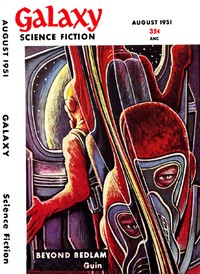
Pictures Don't Lie by Katherine MacLean
Katherine MacLean's 'Pictures Don't Lie' is a gem of a short story that packs a powerful punch. Published in 1951, it imagines a world on the brink of a monumental discovery, only to have reality itself seem to crumble.
The Story
The world is holding its breath. After years of radio communication, a ship from the planet Vega is finally landing on Earth. A major television network has won the exclusive broadcast rights, turning the event into a global spectacle. Cameras are trained on the landing site, and millions watch from their living rooms. The tension is incredible. The ship descends, lands perfectly, and a ramp extends. The moment of first contact has arrived. But when the camera zooms in, the broadcast shows an empty ramp and an empty field around the ship. The commentators are baffled. Scientists on-site confirm they see nothing. Yet, radio signals from the Vegans insist their ambassadors have disembarked and are waiting to be greeted. The story becomes a frantic puzzle: if the cameras show nothing, and the people on the ground see nothing, but the aliens insist they are there, who—or what—is telling the truth?
Why You Should Read It
What I love about this story is how it uses a simple, high-stakes scenario to ask deep questions. It’s not about laser battles or alien invasions. It’s about the limits of human perception and technology. MacLean brilliantly explores the idea that we might be blind to forms of life or reality that operate outside our understanding. The panic and confusion of the characters feel very real. You can almost hear the TV anchor's voice crack as the script falls apart. It’s a masterclass in building suspense from a conceptual mystery rather than physical danger. For a story written over 70 years ago, its commentary on media spectacle and our trust in what we see feels startlingly modern.
Final Verdict
This is perfect for anyone who loves a clever, thought-provoking sci-fi story that you can read in one sitting. If you're a fan of 'The Twilight Zone' or stories by authors like Ted Chiang that blend science with philosophical questions, you'll adore this. It’s also a fantastic entry point for readers new to classic science fiction, proving that the best ideas are timeless. 'Pictures Don't Lie' is a quiet, brilliant story that proves sometimes the biggest mysteries aren't in the stars, but in our own minds.
Jessica Thompson
9 months agoI started reading out of curiosity and the character development leaves a lasting impact. Don't hesitate to start reading.
Aiden Clark
2 weeks agoWow.




Edward Gonzalez
1 year agoFrom the very first page, the arguments are well-supported by credible references. I learned so much from this.